
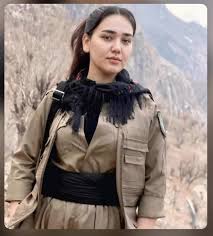
MURDER OF 3 KURDISH FEMALE FIGHTERS
Iran continues its attacks on Rojhilat forces in South Kurdistan. Three female Peshmerga fighters were killed in rocket and drone attacks on PDKI facilities. Xazal is one of them; she died from her injuries due to a lack of medical care. The Kurdish Women’s Movement (KJK) strongly condemned the attacks and placed them in a broader political context. In a statement, the Kurdish Women’s Movement linked these attacks to a more widespread system of violence against Kurds and women. It is emphasized that the attacked forces had not carried out any military actions against Iran and that the attacks are therefore seen as a targeted strategy against the political existence of Kurdish structures.
APRIL THE 8TH: IRAN AND THE USA AGREE ON A TWO-WEEK CEASEFIRE
Iran’s demands were the withdrawal of all US troops from the region, the lifting of all sanctions, and reparations payments to Iran. In return, the opening of the Strait of Hormuz was to be implemented, to which the Iranian Foreign Minister also agreed. Further developments show that attacks, primarily on oil facilities and power plants, continue. Israel agreed to the ceasefire but continues to attack Lebanon. Iran, however, will not open the strait as long as Israel remains at war with Lebanon: if it is opened, Iran demands a toll for all passing ships. Germany wants to participate in military operations in the Strait of Hormuz after a possible peace agreement. The US wants to independently impose a naval blockade to stop ships passing through with Iranian permission.
ANFAL CAMPAIGN
In 1987/88, the Iraqi regime (Saddam Hussein) conducted military operations specifically targeting the Kurdish people. Villages were besieged, men were separated from women and children from their families, and arson, mass arrests, executions, and genocide ensued. The use of chemical weapons, such as in Halabja (March 1988), resulted in long-term illnesses. A total of 180,000 Kurds were killed or disappeared, and hundreds of thousands were displaced. These genocides were led by Ali Hassan al-Majid, an expert in the use of chemical weapons. The underlying reasons included the exercise of control and power, the Iran-Iraq War, collective punishment, and the Arabization of strategic parts of Kirkuk province. Commemorative events were organized in various cities on April 14th.
THE RED WEDNESDAY
The first Wednesday in April is celebrated as New Year’s Day by the Yazidis. On this day, spring, the awakening of nature, and renewal are celebrated. The angel Melek Taus is also said to have created the earth and made it habitable for humans. Poppies (Kulîka Nîsanê – the flower of April) are a symbol of the New Year festival, and their blossoms are used to decorate houses. It is customary not to marry in April, as the month is considered sacred and is also known as Bûka Salê (the bride of the year). It is a month in which only the gods marry. Çarşema Sor is not only a traditionally important day for the Yazidis, but also expresses the Yazidi identity and their long struggle to defend it.