
Riseup4Rojava Analysis
Ceasefire Agreement of January 29, 2026
February 7, 2026
Other languages: FR – ITA – GER – SWE – SRB – ESP
As result of the resistance in Rojava and worldwide, the Syrian Democratic Forces (SDF) and the Syrian Transitional Government of HTS agreed on January 29 to sign a ceasefire agreement the day after, which also regulates the integration of some of Rojava’s institutions into the Syrian state, which has been under negotiation for a year. While this immediately de-escalated the war on the front lines, it is well known that previous ceasefires have been overturned by renewed attacks on the revolution. Now that there is an opportunity to put the agreement into practice, we must understand the interests of the hegemonic powers behind it, how their alliances are changing, and where we need to build pressure to preempt these powers and thwart their plans.
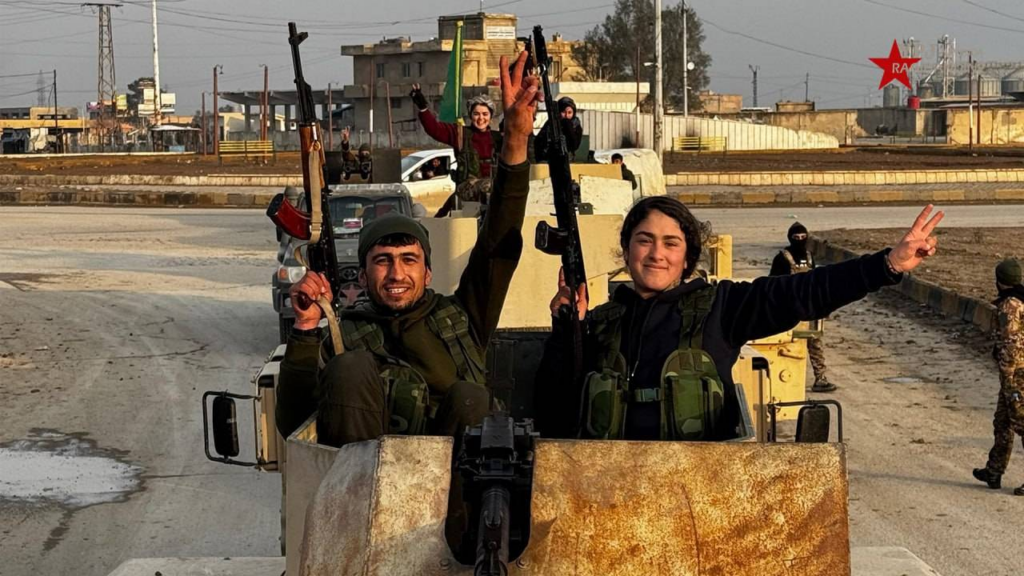
For us internationalists, it is clear that the Rojava revolution will continue. While society fled the city during the ISIS attack on Kobanê in 2014 and a small group of PKK fighters turned the tide with their iron will, Rojava has now surpassed itself. The same dark forces are attacking again. But knowing that victory is possible, the people of Rojava have decided to go to the front in thousands, and hundreds of young people have come new to Rojava to stand against the enemy. In the strategy of revolutionary people’s war, the youth is prepared to keep night watch in the cities for days, food is cooked for the front in the villages, and new societal women’s defence units have been formed, also since the agreement. Just as Rojava’s society has not taken a step back, we too, as the international solidarity movement, remain vigilant and ready.
A new chapter in the war of the Middle East and Rojava
First, it is important to note that the war being waged in Rojava today is part of a larger war for dominance in the Middle East. October 7, 2023, and Israel’s subsequent attacks on Gaza marked the beginning of a new chapter in this war. The US and Israel have set themselves the goal of finally crushing the hegemony of Iran and all parties acting under its leadership in a joint operation. They want to further weaken Russian and Chinese influence. Their long term aim is to integrate the Middle East in the capitalist flow lead by the US, to gain control over resources and establish a trade route, using the Middle East as a hub of transfer. In doing so, they do not shy away from genocide, as in Gaza, or the overthrow of regimes, as in Syria. In this way, Jolani was brought to Damascus to replace the Iran-friendly ruler Assad.
While Jolani and the HTS were still on their campaign to Damascus, Turkey attempted to crush Rojava with its mercenary troops. However, these plans were ultimately thwarted by the resistance at the Tishreen Dam. As a result, we could see a balance of power that led to the agreement of March 10, 2025. The agreement formulated for the first time a framework for possible integration into the Syrian state and laid down the principles and red lines of the negotiations. In the negotiations, the delegates of the revolution advocated integration in order to thwart the US’s divide and rule strategy, since a Syria divided into blocks is easier to control than a unified Syria. For if politics succeeds in resolving the contradictions between people and social groups, the democratic coexistence of different ethnic groups can become an obstacle to the plans of the hegemonic powers that are trying to control the Middle East and make it dependent on external powers.
Integration based on clear revolutionary principles could dissolve the military front line within Syria, creating space for ideological struggle within society. In last year’s negotiations, the SDF and Autonomous Administration had such a strong position that an agreement was almost reached under the supervision of France and the US. The SDF’s conditions were to remain as three battalions under its own command and that the women’s defense units, the YPJ, are recognized. At the end of the year, it was Turkey that intervened, trying to force the revolution into total surrender. As the Turkish state’s influence on Jolani continued to grow, the regime in Damascus gradually adopted Turkey’s positions and narratives one by one. They adopted their conditions, as well as their anti-propaganda against the PKK and the revolutionary movement.
On January 4 of this year, in the last negotiations that took place before the war, an agreement could have been reached, but the meeting was suddenly broken off due to pressure from inside the Syrian regime and Turkey. This was followed by a meeting between the US, HTS and Israel in Paris the next day. The hegemonic powers agreed, in their respective interests, to wage war against the revolution with the jihadist forces of HTS, ISIS, and all the mercenary troops controlled by Turkey.
On this basis, the war began on January 6 with an offensive aimed at destroying the Rojava Revolution and its principles of women’s liberation, ecology and democracy. In particular, it was the Turkish state that fueled the war with arms deliveries, drone technology, and mercenary troops. It attempted to break the unity of the Kurdish and Arab people to weaken the project of the democratic unity in Syria.
Conspiracy of the hegemonic powers
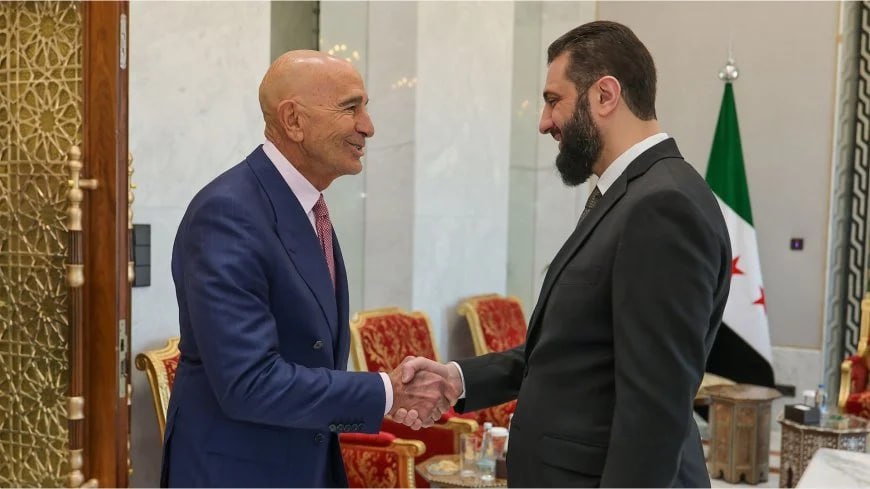
The US and Israel also played their part. While the US has been trying to bring Rojava under its control for 14 years, it had to admit that this attempt was doomed to failure. This is another reason why Jolani was set up as a puppet who follows the lead of the US and Israel. This is also why these powers have once again led Jolani to launch an offensive in Syria. The goal of these two powers was, in particular, to gain control over ISIS prisoners. The path to their ultimate goal of pushing back Iranian hegemony also seems to lead through Iraq, with the possibility of an intervention in Iraq, attacking the Iranian proxy militia Hashd al-Shaabi there. To prepare for this step, the US needs control over the border between Syria and Iraq, which it secured through the recent war.
The European Union and its member states have started a wide-ranging normalization process with Jolani and his HTS regime. Hundreds of millions of Euros are being funneled into the Syrian state, its institutions and government. The common denominator for practically all these deals are first and foremost that Damascus will receive Syrian refugees now living in Europe. Secondly, the EU wants to make sure to have a prime position when it comes to access to markets and resources.
Other forces, such as Saudi Arabia and Qatar helped to boost Arab nationalism with their investments and Qatar also used the state media outlet al-Jazeera to spread the narratives and fake news necessary to delegitimize the SDF, legitimize Jolani’s regime, and incite the narrative of an Arab-Kurdish conflict, which paved the way for the war offensive.
On this basis, all jihadist forces, from HTS to ISIS to Turkey’s mercenary troops, have come together to attack the two districts of Sheikh Maqsoud and Ashrafiye in Aleppo. In the shadow of fake news from Al Jazeera, the Syrian state agency SANA, and the Turkish media, several hundred of our comrades resisted tens of thousands of attackers, opposing their tanks with their willpower and guerrilla tactics of revolutionary people’s war. It was this week that created the spirit of resistance that has sustained the solidarity movement and built the defense of Rojava.
An attack on the revolution is an attack on democracy and the women’s revolution
When the war spread to the main areas of North East Syria, the goal of the hegemonic powers was to initiate a Kurdish-Arab war in the Arab cities of Raqqa, Tepqa, and Deir ez-Zor. To thwart this plan, the SDF/YPJ decided to retreat to the predominantly Kurdish areas. Many Arab tribes have changed sides in their opportunism. At the same time, there are countless Arab women and young people who remain committed to the revolution and are proof that the project of Kurdish-Arab unity will not fail.
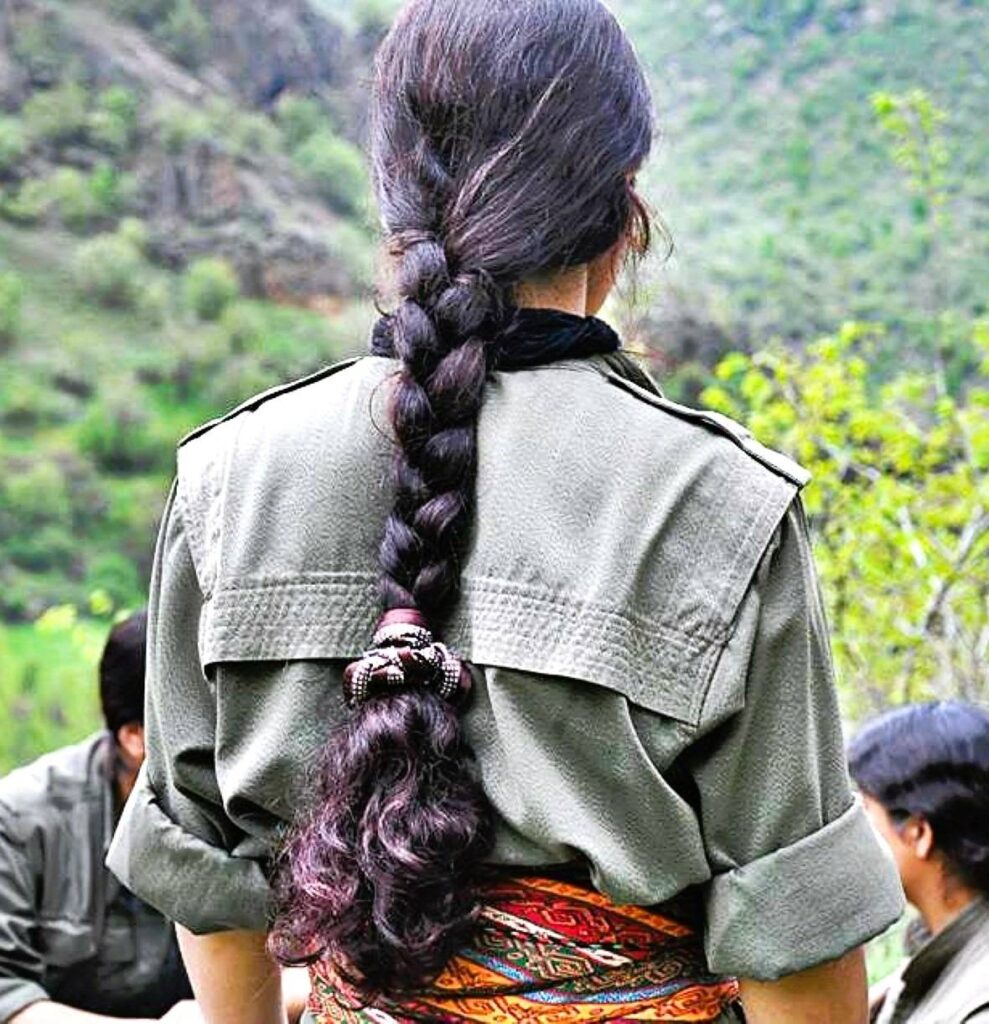
The attacks on women were particularly severe in the cities taken over by regime troops. With the philosophy of the women’s revolution, ISIS was already defeated in Kobanê in 2014/15. It is the same forces and the same mentality that have tried again today to take revenge on the revolution. That is why they have destroyed women’s institutions in particular and even set fire to the private homes of organized women. The SDF described the offensive of the last few weeks as twice as strong as the ISIS attack 10 years ago. They not only wanted to take revenge, but to annihilate the revolution.
This also means, that if the war that today takes place in Syria is not stopped there, could spread to Iraq tomorrow, threatening the revolutionary projects in Shengal and Mexmûr and eventually arrive in the free mountains of Kurdistan, in Garê and Qandîl. Starting in Rojava, these powers aim to erase the revolution wherever it grows.
The power of an organized society breaks the offensive
They besieged Kobanê and brought the front line to all Kurdish cities. Rojava rose up against this attack, declared general mobilization, and the different parts of Kurdistan joined forces. All over Europe, Abya Yala (South America), and worldwide, the actions and manifestations demonstrated the strength of an organized society. The experience of victory over ISIS in Kobanê gave people the confidence to go to Rojava and to the front lines, determined and ready to defend the revolution in the spirit of Kobanê. Every single action carried out worldwide strengthened the struggle in Rojava. The high level of resistance has made the enemy aware of its severe losses in case they would continue the offensive. The resistance and mobilization in Rojava, whole Kurdistan and worldwide have forced the hegemonic powers to change their calculations.
Most important, Turkey fears that in response to an open war against Rojava, the whole of Kurdistan, especially Bakur (Northern Kurdistan/Turkey), would rise up in revolt, shattering the so-called peace process. The inner crisis, that the Turkish state tried to cover with war to the outside for years, could multiply to a tipping point. On the other hand, Turkey faces the danger that a victory of Jolani would finally pave the way for Israel’s trade route project and leave Turkey out of the US’ plans.
On this basis, the negotiations have achieved a result through the strength of the revolution. For the revolution in Rojava is not based on the power of any external force, but on the power of society, in Kurdistan and worldwide.
Take action!
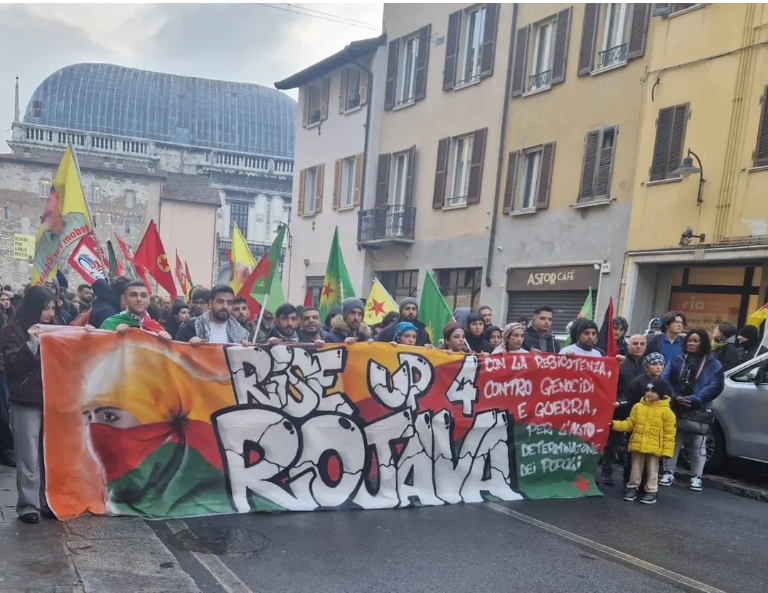
That is why it is important now, more than ever, to maintain pressure on the streets and in action to ensure that the agreement is implemented on the basis of our conditions and principles. Act where you live against the ones collaborating with the HTS-regime; the governments, the companies, the NGOs. Move to delegitimize and defund HTS. Let us demonstrate the reality to the world: The front line between the women’s revolution and the mentality of ISIS lies in Syria. It is our responsibility to ensure the gains of the women’s revolution and dismantle the jihadist and fascist intentions of the Syrian regime.
Ready to defend
Rojava remains under threat and the situation remains unclear. At the same time, the signed agreement also offers opportunities. Among other things, it provides for all displaced persons to be able to return to their homes. In order to implement the return to Afrin, Serêkanîyê, Sheikh Maqsoud, Ashrafiye and the other cities, significant international pressure is needed.
If the ceasefire can be maintained, it will reduce the immediate threat of war and open up opportunities. The project of the revolution in Syria is to dissolve the front line. This does not mean an end to the revolution or self defense, but rather a shift from military struggle to political-societal struggle. This regime celebrates the ceasefire contract as a victory for them, while in reality it thwarts the plans of the hegemonic powers to drown the Middle East in massacres and war. The danger of genocide remains. But knowing that the self-defense of the revolution is steadfast, the new phase holds the possibility of uniting all struggles for freedom in Syria.
RiseUp4Rojava Coordination,
February 7, 2026
Riseup4Rojava Analysis
Ceasefire Agreement of January 29, 2026
February 7, 2026
As result of the resistance in Rojava and worldwide, the Syrian Democratic Forces (SDF) and the Syrian Transitional Government of HTS agreed on January 29 to sign a ceasefire agreement the day after, which also regulates the integration of some of Rojava’s institutions into the Syrian state, which has been under negotiation for a year. While this immediately de-escalated the war on the front lines, it is well known that previous ceasefires have been overturned by renewed attacks on the revolution. Now that there is an opportunity to put the agreement into practice, we must understand the interests of the hegemonic powers behind it, how their alliances are changing, and where we need to build pressure to preempt these powers and thwart their plans.
For us internationalists, it is clear that the Rojava revolution will continue. While society fled the city during the ISIS attack on Kobanê in 2014 and a small group of PKK fighters turned the tide with their iron will, Rojava has now surpassed itself. The same dark forces are attacking again. But knowing that victory is possible, the people of Rojava have decided to go to the front in thousands, and hundreds of young people have come new to Rojava to stand against the enemy. In the strategy of revolutionary people’s war, the youth is prepared to keep night watch in the cities for days, food is cooked for the front in the villages, and new societal women’s defence units have been formed, also since the agreement. Just as Rojava’s society has not taken a step back, we too, as the international solidarity movement, remain vigilant and ready.
A new chapter in the war of the Middle East and Rojava
First, it is important to note that the war being waged in Rojava today is part of a larger war for dominance in the Middle East. October 7, 2023, and Israel’s subsequent attacks on Gaza marked the beginning of a new chapter in this war. The US and Israel have set themselves the goal of finally crushing the hegemony of Iran and all parties acting under its leadership in a joint operation. They want to further weaken Russian and Chinese influence. Their long term aim is to integrate the Middle East in the capitalist flow lead by the US, to gain control over resources and establish a trade route, using the Middle East as a hub of transfer. In doing so, they do not shy away from genocide, as in Gaza, or the overthrow of regimes, as in Syria. In this way, Jolani was brought to Damascus to replace the Iran-friendly ruler Assad.
While Jolani and the HTS were still on their campaign to Damascus, Turkey attempted to crush Rojava with its mercenary troops. However, these plans were ultimately thwarted by the resistance at the Tishreen Dam. As a result, we could see a balance of power that led to the agreement of March 10, 2025. The agreement formulated for the first time a framework for possible integration into the Syrian state and laid down the principles and red lines of the negotiations. In the negotiations, the delegates of the revolution advocated integration in order to thwart the US’s divide and rule strategy, since a Syria divided into blocks is easier to control than a unified Syria. For if politics succeeds in resolving the contradictions between people and social groups, the democratic coexistence of different ethnic groups can become an obstacle to the plans of the hegemonic powers that are trying to control the Middle East and make it dependent on external powers.
Integration based on clear revolutionary principles could dissolve the military front line within Syria, creating space for ideological struggle within society. In last year’s negotiations, the SDF and Autonomous Administration had such a strong position that an agreement was almost reached under the supervision of France and the US. The SDF’s conditions were to remain as three battalions under its own command and that the women’s defense units, the YPJ, are recognized. At the end of the year, it was Turkey that intervened, trying to force the revolution into total surrender. As the Turkish state’s influence on Jolani continued to grow, the regime in Damascus gradually adopted Turkey’s positions and narratives one by one. They adopted their conditions, as well as their anti-propaganda against the PKK and the revolutionary movement.
On January 4 of this year, in the last negotiations that took place before the war, an agreement could have been reached, but the meeting was suddenly broken off due to pressure from inside the Syrian regime and Turkey. This was followed by a meeting between the US, HTS and Israel in Paris the next day. The hegemonic powers agreed, in their respective interests, to wage war against the revolution with the jihadist forces of HTS, ISIS, and all the mercenary troops controlled by Turkey.
On this basis, the war began on January 6 with an offensive aimed at destroying the Rojava Revolution and its principles of women’s liberation, ecology and democracy. In particular, it was the Turkish state that fueled the war with arms deliveries, drone technology, and mercenary troops. It attempted to break the unity of the Kurdish and Arab people to weaken the project of the democratic unity in Syria.
Conspiracy of the hegemonic powers
The US and Israel also played their part. While the US has been trying to bring Rojava under its control for 14 years, it had to admit that this attempt was doomed to failure. This is another reason why Jolani was set up as a puppet who follows the lead of the US and Israel. This is also why these powers have once again led Jolani to launch an offensive in Syria. The goal of these two powers was, in particular, to gain control over ISIS prisoners. The path to their ultimate goal of pushing back Iranian hegemony also seems to lead through Iraq, with the possibility of an intervention in Iraq, attacking the Iranian proxy militia Hashd al-Shaabi there. To prepare for this step, the US needs control over the border between Syria and Iraq, which it secured through the recent war.
The European Union and its member states have started a wide-ranging normalization process with Jolani and his HTS regime. Hundreds of millions of Euros are being funneled into the Syrian state, its institutions and government. The common denominator for practically all these deals are first and foremost that Damascus will receive Syrian refugees now living in Europe. Secondly, the EU wants to make sure to have a prime position when it comes to access to markets and resources.
Other forces, such as Saudi Arabia and Qatar helped to boost Arab nationalism with their investments and Qatar also used the state media outlet al-Jazeera to spread the narratives and fake news necessary to delegitimize the SDF, legitimize Jolani’s regime, and incite the narrative of an Arab-Kurdish conflict, which paved the way for the war offensive.
On this basis, all jihadist forces, from HTS to ISIS to Turkey’s mercenary troops, have come together to attack the two districts of Sheikh Maqsoud and Ashrafiye in Aleppo. In the shadow of fake news from Al Jazeera, the Syrian state agency SANA, and the Turkish media, several hundred of our comrades resisted tens of thousands of attackers, opposing their tanks with their willpower and guerrilla tactics of revolutionary people’s war. It was this week that created the spirit of resistance that has sustained the solidarity movement and built the defense of Rojava.
An attack on the revolution is an attack on democracy and the women’s revolution
When the war spread to the main areas of North East Syria, the goal of the hegemonic powers was to initiate a Kurdish-Arab war in the Arab cities of Raqqa, Tepqa, and Deir ez-Zor. To thwart this plan, the SDF/YPJ decided to retreat to the predominantly Kurdish areas. Many Arab tribes have changed sides in their opportunism. At the same time, there are countless Arab women and young people who remain committed to the revolution and are proof that the project of Kurdish-Arab unity will not fail.
The attacks on women were particularly severe in the cities taken over by regime troops. With the philosophy of the women’s revolution, ISIS was already defeated in Kobanê in 2014/15. It is the same forces and the same mentality that have tried again today to take revenge on the revolution. That is why they have destroyed women’s institutions in particular and even set fire to the private homes of organized women. The SDF described the offensive of the last few weeks as twice as strong as the ISIS attack 10 years ago. They not only wanted to take revenge, but to annihilate the revolution.
This also means, that if the war that today takes place in Syria is not stopped there, could spread to Iraq tomorrow, threatening the revolutionary projects in Shengal and Mexmûr and eventually arrive in the free mountains of Kurdistan, in Garê and Qandîl. Starting in Rojava, these powers aim to erase the revolution wherever it grows.
The power of an organized society breaks the offensive
They besieged Kobanê and brought the front line to all Kurdish cities. Rojava rose up against this attack, declared general mobilization, and the different parts of Kurdistan joined forces. All over Europe, Abya Yala (South America), and worldwide, the actions and manifestations demonstrated the strength of an organized society. The experience of victory over ISIS in Kobanê gave people the confidence to go to Rojava and to the front lines, determined and ready to defend the revolution in the spirit of Kobanê. Every single action carried out worldwide strengthened the struggle in Rojava. The high level of resistance has made the enemy aware of its severe losses in case they would continue the offensive. The resistance and mobilization in Rojava, whole Kurdistan and worldwide have forced the hegemonic powers to change their calculations.
Most important, Turkey fears that in response to an open war against Rojava, the whole of Kurdistan, especially Bakur (Northern Kurdistan/Turkey), would rise up in revolt, shattering the so-called peace process. The inner crisis, that the Turkish state tried to cover with war to the outside for years, could multiply to a tipping point. On the other hand, Turkey faces the danger that a victory of Jolani would finally pave the way for Israel’s trade route project and leave Turkey out of the US’ plans.
On this basis, the negotiations have achieved a result through the strength of the revolution. For the revolution in Rojava is not based on the power of any external force, but on the power of society, in Kurdistan and worldwide.
Take action!
That is why it is important now, more than ever, to maintain pressure on the streets and in action to ensure that the agreement is implemented on the basis of our conditions and principles. Act where you live against the ones collaborating with the HTS-regime; the governments, the companies, the NGOs. Move to delegitimize and defund HTS. Let us demonstrate the reality to the world: The front line between the women’s revolution and the mentality of ISIS lies in Syria. It is our responsibility to ensure the gains of the women’s revolution and dismantle the jihadist and fascist intentions of the Syrian regime.
Ready to defend
Rojava remains under threat and the situation remains unclear. At the same time, the signed agreement also offers opportunities. Among other things, it provides for all displaced persons to be able to return to their homes. In order to implement the return to Afrin, Serêkanîyê, Sheikh Maqsoud, Ashrafiye and the other cities, significant international pressure is needed.
If the ceasefire can be maintained, it will reduce the immediate threat of war and open up opportunities. The project of the revolution in Syria is to dissolve the front line. This does not mean an end to the revolution or self defense, but rather a shift from military struggle to political-societal struggle. This regime celebrates the ceasefire contract as a victory for them, while in reality it thwarts the plans of the hegemonic powers to drown the Middle East in massacres and war. The danger of genocide remains. But knowing that the self-defense of the revolution is steadfast, the new phase holds the possibility of uniting all struggles for freedom in Syria.
RiseUp4Rojava Coordination,
February 7, 2026